Tooth loss is an unfortunate occurrence that can result from various causes. Sometimes it’s caused by accident, occasionally by advanced stages of tooth decay, and sometimes by other oral health factors. Regardless of the underlying reason for tooth loss, it’s a problem that must be addressed to avoid bone deterioration and restore the full functionality of your mouth. All-on-4 dental implants are one of the most innovative and modern treatment options for improving your quality of life and obtaining a beautiful smile.
What Is All-On-4 Dental Implant?
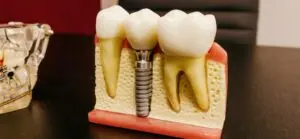
All-on-4 implants consist of four titanium posts placed strategically along your dental arch and linked to a denture base. The All-on-4 procedure is designed to replace an entire arch of teeth to restore the functionality of your bite and the aesthetics of your smile. This restoration method was specifically designed to help you if you suffer from multiple missing teeth, decayed teeth, and limited jawbone density that requires a bone graft.
With the All-on-4 procedure, the posterior implants are tilted 45 degrees toward the back of your mouth and positioned in the anterior maxilla, an area of your jaw with a higher bone density. As a result, this oral surgery does not require the same bone density as other dental implant procedures. While having a full set of teeth supported by a small number of implant fixtures was not novel, using a 45° angle for the posterior implants led to the development of All-On-4 implant surgery.
All-On-4 Dental Implant Procedure
Before your All-on-4 procedure, we will evaluate your oral health by performing various diagnostic tests to measure your bone structure and jaw bone density. We will also use special 3D dental imaging to make an accurate diagnosis, plan the surgical placement and create a treatment plan that enables us to insert the implants in their right position. We’ll also review your medical history, current health issues, and medications to see if you’re an ideal candidate for the treatment. After your initial consultation, you will be scheduled for surgery.
Your All-On-4 dental implant procedure will begin with sedation. So make sure to have someone drive you home after your dental procedure on the day of surgery. During your dental restoration, we will extract any remaining teeth and make small incisions in your soft tissue to shape the four upper and four lower arch sockets, all while you are under full sedation. The individual implants will be inserted through these incisions. Later, a connector is fastened to the implant screws in your jaw. In the final phase, the gums are sutured, and a temporary denture base is placed while the implant sites heal.
A dental implant procedure requires several months of healing time. As this surgical procedure is mostly atraumatic, the recovery time is significantly reduced, and your jawbone and gum tissue should be fully healed after three to six months. Although everyone’s healing process is different, you can expect to rest for at least 72 hours after surgery and use ice packs to minimize swelling. We may also recommend painkillers and antibiotics if necessary. A soft food diet is strongly recommended for the first few months after surgery to alleviate discomfort and prevent placing too much force on the new implants. After completing osseointegration, we will swap your temporary teeth with permanent dentures.
All-On-4 Implant Options
When considering All-on-four treatment, there are several options to choose from:
All the zirconia teeth, acrylic teeth, and titanium bars are customized to provide the perfect fit and color. However, it’s important to note that no one material or implant option is best for all patients. Rather, it’s more important that we completely understand your oral health before making a recommendation.
How Much Do All-On-4 Dental Implants Cost
Numerous factors can influence the price of All-on-4 treatment, including:
Will Insurance Cover All-On-Four Dental Implants?
Because many dental insurance companies only cover a portion of the cost, you should still file and send a dental implant claim to the insurance company. However, some agencies will not let you claim the cost of the oral surgery. This is because dental implants are still classified as cosmetic procedures by many insurance companies despite their health benefits.
The cost of your dental treatment for all-on-4 dental implant surgery depends on your insurance policy. However, as the coverage is minimal in most cases, it’s best to review their policies for specifics, as certain plans will cover this treatment.
Ways to Finance Your Dental Care
Fortunately, there are ways to lower the cost of All-on-4 implants; some of the most beneficial options include the following:
In addition, you can also combine dental financing with other payment options, such as flexible spending accounts (FSA), health savings accounts (HSAs), and dental insurance benefits.
Are All-On-4 Implants a Good Investment?
All-on-4 is a smart financial move because of the high rate of return and minimum upkeep required. If you take care of your implant, it can last for the rest of your life. But traditional dentures will need to be changed every five to 10 years, no matter how well you care for them. Some of the other benefits include:
The advantages of All-on-4 implants are not limited to monetary gains. All-on-4 implants can help you gain confidence and improve your natural smile. But this confidence is not limited to being able to smile again; it also stems from knowing that your implants are firmly attached to your dental bridge. That means you don’t have to worry about any potential embarrassment associated with denture difficulties, such as them falling out during a meal or conversation. This assurance is what makes All-on-4 implants so beneficial in the end.
The first step in determining the cost of All-on-4 implants is to schedule a consultation, where we will evaluate your specific requirements and long-term goals. Once we’ve determined your candidacy for All-on-4 implants, we can advise you on the best course of action with your smile reconstruction.
At Big Smile Dental we look forward to understanding your dental concerns and finding the best treatment plan to get you smiling, speaking, and eating comfortably and more confidently.
Frequently Asked Questions about All-On-4 Dental Implant?
Does getting All-on-4 hurt, and how bad is the pain afterward?
No. You won’t feel the surgery itself because you’re fully sedated. Afterward, most patients describe soreness and swelling rather than sharp pain, well-controlled with prescribed medication and ice packs. Discomfort usually peaks within the first 48–72 hours and fades over the following week. Because All-on-4 is minimally invasive, recovery is often gentler than expected.
Can I get All-on-4 if I smoke or have diabetes?
Often yes — but both raise your risk. Smoking slows healing and is a leading cause of implant failure, so dentists usually recommend quitting before and after surgery. Well-controlled diabetes generally isn’t a barrier, though poorly managed blood sugar impairs healing. Your dentist reviews your full health history at consultation to confirm you’re a safe candidate.
What's the difference between All-on-4 and All-on-6 implants?
Both replace a full arch, but All-on-6 uses six implants instead of four for added support and stability — often chosen for the upper jaw or when bone allows. All-on-4 needs less bone and typically costs less, making it more accessible. Neither is universally better; the right choice depends on your bone density and jaw.
Does Medicare cover All-on-4 dental implants?
Generally no. Traditional Medicare doesn’t cover dental implants, treating them as cosmetic. Some Medicare Advantage plans include limited dental benefits that may offset extractions or exams, but rarely the full All-on-4 cost. Check your specific plan’s dental rider. Most patients rely on financing, dental savings plans, or FSA/HSA funds instead.
Is All-on-4 really "teeth in a day", do I walk out with teeth the same day as surgery?
Often yes. With All-on-4, a temporary fixed set of teeth is typically placed the same day as surgery, so you leave with a full smile, hence “teeth in a day.” These temporaries let you eat and speak while your implants heal over 3–6 months, after which your permanent teeth are fitted.
How do you clean and floss under All-on-4 implants?
Because All-on-4 is fixed, you clean it like natural teeth plus a little extra. A water flosser (such as a Waterpik) is ideal for flushing debris under the bridge, paired with a soft brush and interdental brushes along the gumline. Daily cleaning plus regular hygiene visits keeps the implants healthy long-term.
Are All-on-4 implants removable, or are they fixed in permanently?
Fixed. All-on-4 teeth are screwed securely onto your implants and stay in your mouth — you can’t take them out yourself, unlike traditional or snap-in dentures. Only your dentist can detach them, usually for professional cleaning. This is what gives All-on-4 its stable, natural feel and prevents slipping while eating or talking.
What's the success rate of All-on-4, and what happens if an implant fails?
All-on-4 has a high success rate, generally reported around 95–98% over ten years. Failures are uncommon and usually linked to smoking, infection, or an implant not fusing to bone. If one fails, it can often be replaced after healing. Early follow-up visits help catch issues before they progress.